
Author: Wee Speech PC

Family Road Trip Games

  Favorite Family Road Trip Games (Activities That Will Elicit Language) Are you looking to keep your children occupied on a long road trip without relying on screen time to entertain them? Here is a list of simple and engaging games for all ages that are sure to liven up that long car ride: ISpy: Take turns choosing an object to describe. The player can fill-in-the-blank with any word that describes the object (I spy something blue and round). Players will guess the object based on the description provided 20 Questions: Take turns choosing a mystery item. Players will take turns asking yes and no questions to guess the mystery object (Is it something that is living?) The Alphabet Game:


Read More

What is Vocal Hygiene? Why is it important?

    Vocal hygiene is developing healthy habits to keep your voice healthy. Like the rest of our body, our vocal folds are made up of muscles and tissues. Whenever you exercise or overuse your muscles, you might feel sore. Similarly, our vocal folds can experience strain when the muscles are overused. The goal of vocal hygiene is to lessen the impact of negative vocal behaviors on a daily basis. Examples of negative vocal behaviors include shouting, excessive talking, constant clearing throat/coughing, excessive caffeine, and whispering. When developing healthy vocal hygiene habits think of including the following:   Drinking 6-8 glasses of water Reduce excess taking (if you are taking for 3o minutes take a 10 minute break) Reduce shouting 

Read More

Extracurricular Activities for Children with Special Needs

When considering extracurricular activities for children with special needs, it’s essential to focus on their interests, abilities, and comfort levels. Here are some suggestions to look into: Adaptive Sports: Many communities offer adaptive sports programs tailored to children with disabilities. These can include wheelchair basketball, adaptive swimming, or sensory-friendly sports activities. Here is a link to Chicago’s Adaptive Sports page: https://www.chicagoadaptivesports.com/ Art Classes: Art allows for self-expression and creativity. Look for art classes or workshops that accommodate various abilities and sensory needs. Here is a link to a specific program in Chicago: https://artsoflife.org/ Music Therapy: Music therapy can be highly beneficial for children with special needs. It can help improve communication skills, sensory integration, and emotional expression. Here is a link to

Read More

Free Museum Days Summer 2024

  Museums serve as valuable resources for speech therapy, offering a dynamic and enriching environment that supports language development, communication skills, and social interaction in individuals of all ages. Check out some of these free museum days this spring and summer for Illinois residents.   -Adler Planetarium: Wednesdays 4pm-10pm -Field Museum: Every Wednesday  -Shedd Aquarium: Tuesdays 5pm-9pm (March 26th-June 25th) -Chicago History Museum: April 10th, 18th, 24th and May 1st, 27th, 29th -Museum of Science and Industry: April 21st -DuSable Black History Museum and Education Center: Every Wednesday  -Museum of Contemporary Art: Every Tuesday -Peggy Notebaert Nature Museum: Every Thursday -Illinois Holocaust Museum: last Friday of the month year-long. 

Read More

Why does the history intake form ask about the types of textures my child eats and how does this relate to speech therapy?

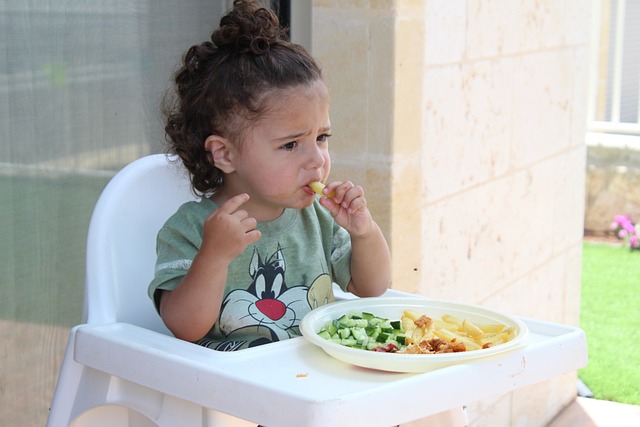
Why does the history intake form ask about the types of textures my child eats and how does this relate to speech therapy? If your child is undergoing a speech therapy evaluation, it is important for the therapist to know if your child struggles with any textures because that can be an implication of a deficit. Speech therapy often involves addressing oral motor skills, swallowing difficulties, and sensory sensitivities, all of which can be influenced by the textures of the foods a child consumes. Here are some examples of how different food textures relate to speech therapy: Smooth/Pureed: These textures are often recommended for children with swallowing difficulties or oral motor delays. Smooth foods require minimal chewing and are easier

Read More

Practicing tips for Success Over the Summer

    The school year has come to an end!  How do you create a successful environment to practice your speech? First, identify your children’s speech goals. Write your child’s goals down on a white board or family calendar that is visible for you and your child to see. If you are unsure about the goal, reach out to your child’s Speech Language Pathologist regarding their current goals in therapy.  Second, discuss the importance of practicing with your child and other caregivers in your child’s life. Applying the skills learned within speech sessions into different environments can help to broaden your child’s understanding of concepts. There are several ways to incorporate practicing in your everyday life. You can incorporate a

Read More

The Importance of Carryover Activities

What is a carryover activity? A carryover activity takes the skills we are targeting in our speech therapy session and carries them into the client’s environment. Applying the skills learned within speech sessions into different environments can help to broaden the client’s understanding of concepts. Additionally, the use of a carryover activities multiple times per week allows for additional practice of the targeted skill. There are several types of carryover activities that can be used to target skills, a couple of my favorites include picture scenes, I spy, and read aloud.    For more information about carryover activities and fun activities check out ASHA’s publication    https://leader.pubs.asha.org/do/10.1044/scaling-the-carryover-wall/full/   

Read More

Interactive Book Reading:

  Interactive book reading is a highly effective strategy used by educators, caregivers, and speech therapists to engage children in the reading process and promote language development, comprehension, and literacy skills. Here’s how to conduct an interactive book reading session: Choose the Right Book: Select a book that is age-appropriate and aligns with the child’s interests and developmental level. Consider books with engaging illustrations, predictable patterns, and repetitive phrases that encourage participation. Before Reading: Set the stage by introducing the book’s title, author, and illustrator. Encourage the child to make predictions about the story based on the cover or title. Preview any new vocabulary words or concepts that may be encountered in the book. During Reading: Read the story aloud,

Read More

What is a social story?

  A social story is a tool used primarily in special education and therapeutic settings to help individuals, particularly those with autism spectrum disorder (ASD), understand social situations, expectations, routines, and appropriate behaviors. Developed by Carol Gray in the early 1990s, social stories are structured narratives that provide individuals with clear and concrete information about social interactions or events they may encounter. These stories typically include descriptive sentences, pictures, and sometimes simple language to convey the message effectively. Key features of a social story include: Objective: Social stories describe a specific social situation or behavior objectively, highlighting relevant details such as who, what, when, and where. Perspective Taking: Social stories often aim to encourage perspective-taking by helping individuals understand others’

Read More

Are you or someone you know interested in a career as a Speech Language Pathologist?

Are you or someone you know interested in a career as a Speech Language Pathologist? Becoming an SLP typically requires a combination of education, clinical experience, and licensure. Here are the general requirements to become a speech therapist: Earn a Bachelor’s Degree: Begin by completing a bachelor’s degree program in communication sciences and disorders, speech-language pathology, linguistics, psychology, or a related field. Some undergraduate programs may offer specific coursework tailored to prerequisites for graduate-level speech-language pathology programs. Complete a Master’s Degree in Speech-Language Pathology: Graduates with a bachelor’s degree in a related field usually pursue a Master’s degree in speech-language pathology from an accredited program. These programs typically take two years to complete and include coursework in areas such as speech and

Read More